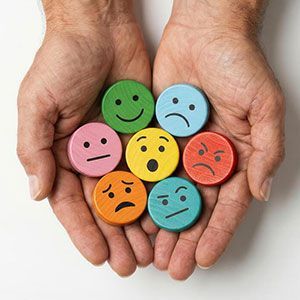


How Does Cognitive Behavioral Therapy Work?
Emily MacIver • January 21, 2026

People rarely arrive at therapy looking for theory. They come because something keeps repeating, and they are tired of feeling caught in it. Cognitive behavioral therapy, often shortened to CBT, offers a practical way of understanding those patterns and changing them . It is a structured, goal-oriented form of talk therapy with strong evidence behind it for concerns such as anxiety disorders, depression, grief, stress, insomnia, chronic pain, and many mental health conditions. At Oak & Sands Counselling Services, CBT is used flexibly, shaped by the needs of individuals, couples, and families. 

How Does Cognitive Behavioral Therapy (CBT) Work?

Noticing the patterns that keep us stuck

Some reactions feel instantaneous, as if the body and mind have already decided before there is time to think. Cognitive behavioral therapy helps bring attention to these emotional challenges. In session, clients look closely at recurring negative thoughts or negative emotions, habits, and responses that show up in daily life. This is not about overanalyzing. It is about understanding how certain patterns formed and why they continue. When these patterns are named and understood, they often lose some of their grip. For many clients, including children and teens, that clarity alone can feel stabilizing.

CBT is especially helpful for treating anxiety, depression, eating disorders, and obsessive compulsive disorder. It’s also used to support those living with chronic stress or sleep issues. Any time where the mind feels stuck in a loop that creates problematic behavioral patterns, CBT can provide practical tools and emotional insight that help people understand their reactions and feel more in control of how they respond to life’s challenges.

Understanding the connection between thoughts, feelings, and actions

A situation rarely causes distress on its own. The meaning assigned to it shapes what follows. Cognitive therapy works by helping clients see how a single thought can influence emotional response and behaviour. When people ask about the five steps of CBT, they are usually referring to a process that involves identifying a situation, noticing the thought that appears, recognizing the emotional response, observing the resulting behaviour, and experimenting with a different way of responding. This approach helps clients feel less confused by their emotions and more able to influence them.

Learning new ways to respond, not just react

Change in CBT happens through skill-building. Clients practice responding differently to familiar triggers instead of falling into automatic reactions. One commonly used strategy is the five minute rule. Rather than committing to a large task or difficult coping strategy, a client agrees to try it briefly and then reassess. This lowers resistance and builds confidence over time. CBT is sometimes paired with other approaches, such as Dialectical Behavior Therapy , when emotional regulation is a central concern.

Practicing change in real life, at a manageable pace

Therapy does not end when the session does. CBT places importance on what clients try in their day-to-day lives and how those experiences are processed afterward. Some people worry about the downsides of CBT, particularly its structure. For clients who prefer open exploration, the format can feel limiting. An experienced CBT therapist adjusts pacing and integrates other methods, including trauma-informed care, EMDR, or family-based work, when appropriate. More detail about our approach to Cognitive Behavioral Therapy is available for those considering this style of treatment.

Explore Cognitive Behavioural Therapy With Oak and Sands

Cognitive behavioral therapy is most effective when it is thoughtful, responsive, and grounded in real understanding of the person seeking help. 

At Oak & Sands Counselling Services, CBT is offered as part of a broader, trauma-informed approach that supports children, teens, adults, couples, and families. Our mental health professionals offer therapy sessions that are shaped by experience, clinical depth, and care, with options for in-person therapy in Alliston and virtual counselling across Ontario. 

If you are considering therapy for your mental health problems and emotional health, and want support that feels steady and intentional, we invite you to reach out and take the next step .

Hands counting stacks of cash at a table in dim light
By Emily MacIver March 19, 2026
Starting couples counseling often involves more than deciding to ask for help. Cost can be a big deciding factor in whether or not to seek help, especially when a relationship already feels strained and it is hard to know what support will actually be covered. In Canada, there isn’t any universal mental health care, despite more than a third of Canadians wanting it, and provincial healthcare plans generally only fund mental health services delivered through hospitals, community programs, or physician-based care, rather than psychotherapy in private practice.

Family preparing food together in a bright kitchen around a counter with bowls, vegetables, and a cutting board
By Emily MacIver March 16, 2026
Every family experiences moments of tension, uncertainty, or transition where communication can become strained and misunderstandings may grow, often affecting the entire family. Family therapy offers a supportive space where relatives can slow things down and work through challenges together. At Oak & Sands Counselling, our mental health professionals and trained family therapists can work collaboratively with the whole family to strengthen connection, improve family communication, and support healthier dynamics within the family unit.

Therapist talking with a couple and child in a living room during a family counseling session
By Emily MacIver March 4, 2026
Marriage and family therapy is a form of psychotherapy that focuses on relationships, communication, and the patterns that develop between people over time. It can involve couples, families, co-parents, or one person attending alone to work on relationship dynamics. At Oak & Sands Counselling, we provide relationship and family-focused counselling as part of a broader practice that also includes support for children, teens, women, and men. If you’re trying to understand what this type of therapy actually looks like in practice, the sections below walk through the most common questions we hear.
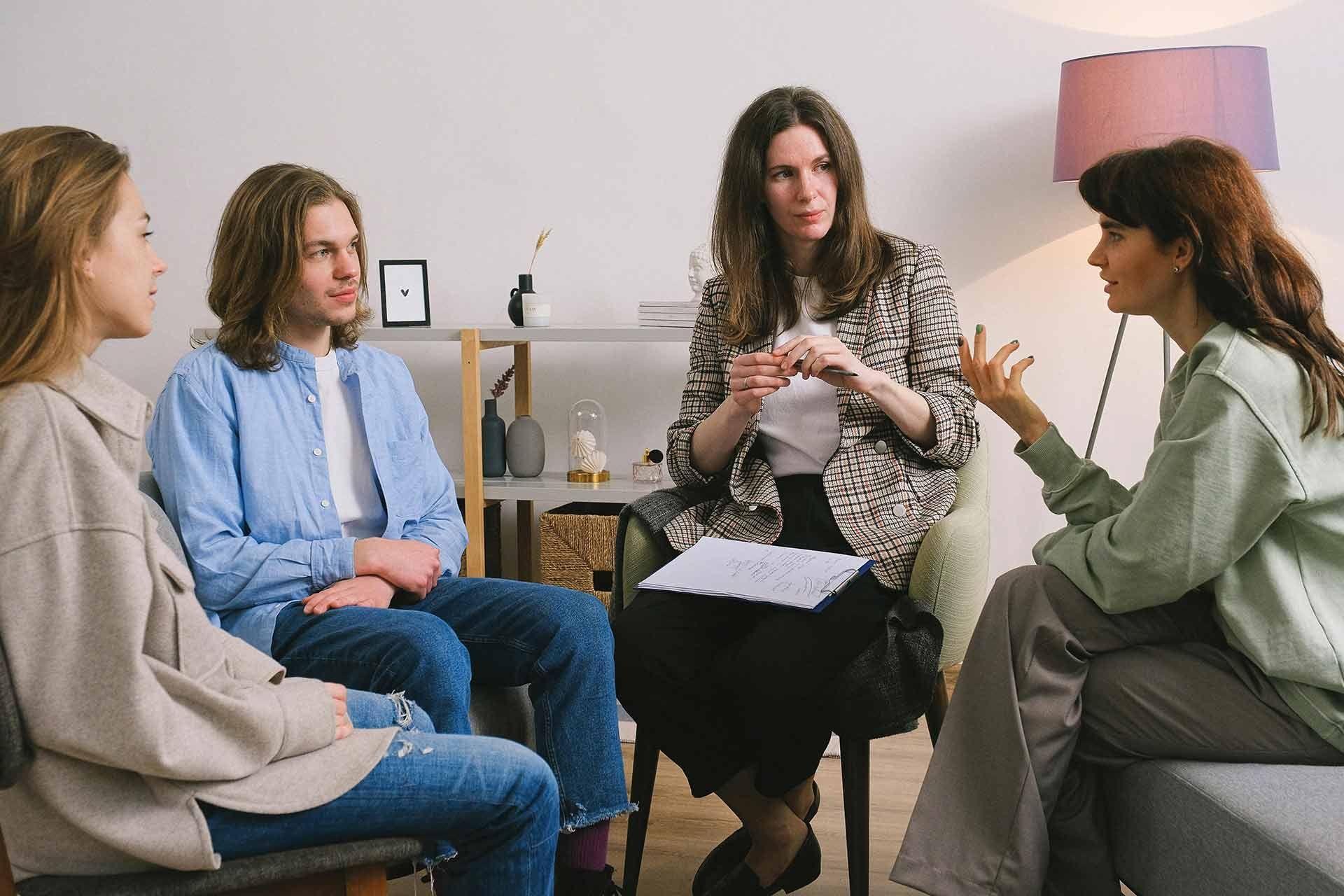
Four people seated in a counseling circle, talking in a bright living room with a floor lamp and side table.
By Emily MacIver March 4, 2026
Dialectical Behavior Therapy (DBT) is a structured form of psychotherapy that was originally developed to treat borderline personality disorder (BPD). It is widely used because it targets problems that commonly occur in BPD, including intense emotions, impulsive behaviour, and self-harm risk. DBT is also used for mental health conditions where emotion regulation is a core difficulty.
Two people talking in a bright living room, seated across a glass coffee table.
By Emily MacIver March 3, 2026
Eye movement desensitization and reprocessing (EMDR) therapy, is a structured mental health method used to help people work through traumatic memories and other distressing material. It’s best known for its role in treating post traumatic stress disorder (PTSD), and its use has expanded to include other concerns as well.  At Oak & Sands Counselling Services, EMDR is one of the therapy modalities we offer alongside couples therapy, family therapy, therapy for women, counselling for teens, therapy for men, and counselling for children. If you’re exploring EMDR for the first time, it can help to know what the appointment itself looks like, including answering questions like how long does a typical EMDR therapy session last and why the timing is part of the work.

Two people talking in a bright living room, one seated on a gray sofa and one in a chair with a notebook.
By Emily MacIver March 3, 2026
CBT is one of the most researched forms of psychotherapy, and it’s also one of the most misunderstood. It often gets boiled down to “just think differently,” when it’s really a structured way of tracking how your thoughts shape your emotions, then practicing new responses until they start to feel natural.  At Oak & Sands Counselling Services, we offer CBT as part of an evidence-based therapy practice that also includes EMDR, couples counselling, family therapy, and support for teens, children, women, and men. If you’re looking for a clear starting point, our breakdown below explains what CBT can change, how it works, and when it may be the right fit.

Man seated on a couch, head in hand, appearing stressed in a dim room
By Emily MacIver January 21, 2026
In high stress moments, it’s common for emotions to feel intense and the space between feeling and acting seems too narrow. Dialectical Behavior Therapy (DBT) is a skills-based therapy grounded in mindfulness and behavioral change, and developed for helping with mental health conditions that cause intense emotions and have difficulty with emotional regulation skills such as borderline personality disorder or people with suicidal behaviors.

Two people talking in a bright counseling office, seated across from each other.
By Emily MacIver December 22, 2025
Dialectical Behavior Therapy (DBT), was developed for people who experience intense emotions and have difficulty with emotional regulation. It is most often associated with borderline personality disorder, though it is widely used with teens, adults, couples, and families facing emotional reactivity, relationship strain, trauma, and mood-related concerns.

Three people in a bright living room talking with a counselor, one person covering their face in distress.
By Emily MacIver December 22, 2025
Cognitive behavioral therapy (CBT) and dialectical behavior therapy (DBT) are often mentioned in the same breath, which can make them sound interchangeable. In practice, they are not. 

Large stone Moai statue in a grassy field under a pale sky
By Emily MacIver November 10, 2025
You've probably noticed more moustaches this month. They represent something deeper than facial hair—they're starting conversations that save lives. Here's why Movember matters and how you can get involved.